How to Create Flash USDT Using ChainIDE and MetaMask
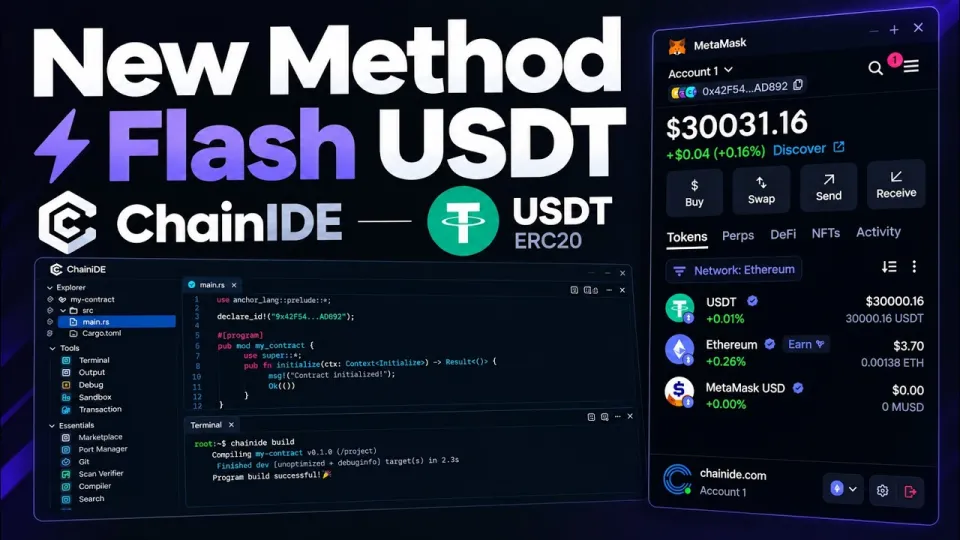
Video: Flash USDT | Found a NEW Method on ChainIDE
Flash USDT is a new method of creating USDT-like tokens on the Ethereum blockchain using smart contracts and development tools like ChainIDE and MetaMask. This approach allows developers and testers to simulate USDT token creation and transactions securely without using real funds or official contracts. To create Flash USDT, you need to understand ERC20 token standards, smart contract deployment, and wallet interactions.
Understanding Flash USDT and Its Purpose
Flash USDT refers to a token mimicking USDT properties created via custom smart contracts. It is primarily used for educational, development, and testing environments rather than real-world transactions. This method helps developers deploy an ERC20 token that behaves similarly to USDT, enabling them to experiment with token interactions, transfers, and contract calls safely.
This method is not connected to the official USDT token issued by Tether but provides a useful sandbox for learning DeFi programming and token mechanics.
Setting Up ChainIDE for Flash USDT Development
ChainIDE (https://chainide.com/) is an online integrated development environment tailored for blockchain smart contract development. To create Flash USDT:
- Register or log in to ChainIDE.
- Create a new Solidity project.
- Use the provided Flash USDT script from the official source (https://sites.google.com/view/defiflashusdt) to implement the ERC20 token contract.
- Modify the contract parameters such as name, symbol (e.g., FLASHUSDT), decimals, and total supply as needed.
- Compile the smart contract using ChainIDE's built-in compiler.
Connecting MetaMask and Deploying the Flash USDT Contract
MetaMask is an Ethereum wallet browser extension that manages accounts and signs transactions. To deploy Flash USDT:
- Install and configure MetaMask to connect to the Ethereum network or a testnet.
- Link MetaMask with ChainIDE by connecting the wallet within the ChainIDE interface.
- Deploy the compiled Flash USDT contract directly from ChainIDE, confirming transactions through MetaMask.
- Once deployed, MetaMask will display the Flash USDT contract address.
This interaction allows you to test token transfers and contract calls from your wallet interface.
Key Components of Flash USDT ERC20 Token
Flash USDT is built on the ERC20 token standard, which defines a set of functions and events for token contracts. Important elements include:
- Name and Symbol: Identifiers for the token.
- Decimals: Number of decimal places (usually 18 for ERC20).
- Total Supply: The initial token amount minted on deployment.
- Balance Mapping: Tracks token balances for each address.
- Transfer and Approval Functions: Enable sending tokens and authorizing others to spend tokens.
Understanding these components ensures you can customize and audit the Flash USDT contract effectively.
Testing and Verifying Flash USDT Setup
Before using Flash USDT in any environment, it is crucial to:
- Verify the smart contract source code and confirm it matches the intended logic.
- Check the contract address on the blockchain explorer if on a public testnet.
- Test token transfers and interactions with multiple accounts to ensure compliance with ERC20 standards.
- Avoid sending real funds to unknown contracts or addresses.
This cautious approach protects you from potential losses and security risks.
Common Mistakes When Working with Flash USDT
Some pitfalls to avoid include:
- Deploying contracts on the wrong network (mainnet vs. testnet).
- Using unverified or modified scripts without understanding their function.
- Sending funds to the Flash USDT contract address assuming it is official USDT.
- Neglecting to connect MetaMask properly, causing failed transactions.
Always double-check all details before proceeding.
Useful Links
- ChainIDE official site for blockchain development: https://chainide.com/
- Flash USDT creation script and documentation: https://sites.google.com/view/defiflashusdt
Conclusion
Creating Flash USDT tokens with ChainIDE and MetaMask is an effective way to explore ERC20 token development and blockchain interactions without risking real assets. The process involves setting up ChainIDE, deploying the smart contract, and managing tokens through MetaMask. This method is ideal for learning and testing DeFi applications and smart contracts.
For a detailed walkthrough and practical demonstration, the channel Rca FastPrint provides an insightful analysis of the Flash USDT method. To start your development journey, visit ChainIDE and explore the Flash USDT script today.
Key takeaways
- Flash USDT is an ERC20 token created via smart contracts on Ethereum.
- ChainIDE is the development platform used to write and deploy Flash USDT contracts.
- MetaMask connects wallets to interact with Flash USDT smart contracts.
- Understanding ERC20 token structure is key to creating Flash USDT.
- Always verify contract code and addresses before using real funds.
Source: Flash USDT | Found a NEW Method on ChainIDE · Markdown version
Questions & answers
What is Flash USDT and how does it differ from official USDT?
Flash USDT is a custom ERC20 token created for development and testing, mimicking USDT's behavior but not connected to the official Tether-issued USDT token.
Can I use Flash USDT for real transactions or investments?
No, Flash USDT is intended for educational and testing purposes only and should not be used for real financial transactions or investments.
How do I connect MetaMask with ChainIDE for deploying Flash USDT?
You connect MetaMask by linking your wallet within the ChainIDE interface, allowing you to deploy smart contracts and sign transactions securely.
What precautions should I take before interacting with Flash USDT contracts?
Always verify the contract's source code, confirm the correct network, and avoid sending real funds to unknown contracts to ensure safety.